Insights from Johann Tranchell’s presentation on Optimisation in Packaging Design
What does Taylor Swift have to do with packaging? More than you might think.
A successful Taylor Swift performance is not just about the songs. It is about stage presence, precision, consistency, audience expectations and creating an experience that makes people want to come back for more.
According to Johann Tranchell, this offers an interesting way to understand what good packaging should achieve.
In his presentation, Optimisation in Packaging Design, Johann drew a comparison between a great live performance and effective packaging. Just as an artist needs to deliver on every aspect of a show, packaging must do more than simply contain a product. It must attract attention, protect what is inside, perform reliably and meet customer expectations.
His analogy captures an important principle: Packaging has to perform.
But what does that really mean for businesses navigating changing customer expectations, sustainability requirements and increasing pressure to optimise resources?
Packaging Is More Than What You See on the Shelf
Packaging has evolved considerably. What was once a relatively straightforward function of containing and protecting products has become a complex exercise in material selection, engineering, product preservation, manufacturing efficiency and customer experience.
The packaging industry continues to grow, driven by urbanisation, rising disposable incomes, e-commerce, convenience, healthcare requirements and demand for better product protection.
Consumers are also becoming more demanding. Packaging must look appealing, feel convenient, preserve product quality and increasingly demonstrate responsible material use.
For manufacturers and exporters, this presents a challenge: how do you meet all these expectations without unnecessarily increasing material consumption, production costs or environmental impact?
The answer lies in packaging optimisation.
The Taylor Swift Principle: Every Element Has a Role
Johann’s Taylor Swift analogy provides a memorable way to understand the different responsibilities of packaging.
Consider the elements of a successful performance:
Stage presence – Clear design and communication
Just as an artist commands attention on stage, packaging needs to attract consumers through effective design and communication. Appearance matters, but it must also communicate the product clearly and appropriately.
Every note counts – Product protection
Every detail contributes to the overall performance. Similarly, packaging must protect a product throughout its journey, maintaining quality and preventing damage, contamination and premature deterioration.
The whole show must run smoothly – Machinability
Behind every successful performance is careful coordination. Packaging must also work efficiently on production lines, with reliable feeding, forming and sealing, consistent quality and minimal interruptions.
Fans leave captivated – Customer satisfaction
A memorable performance creates an audience that wants to return. Likewise, packaging should meet customer needs and expectations, creating a positive experience that encourages continued preference for the product.
The comparison highlights why packaging cannot be judged by appearance or material cost alone. It has to deliver across multiple requirements.

Finding the Sweet Spot: What Is Packaging Optimisation?
Johann defines packaging optimisation as:
The process of finding the best balance of what is important to the customer throughout the packaging’s life cycle.
This is the foundation of effective packaging design.
There is rarely one solution that delivers every benefit without compromise. Improving convenience, for example, could increase cost or make a packaging structure more difficult to recycle. A technically advanced structure may provide excellent protection but create challenges during production.
The objective is therefore not to maximise one feature in isolation. It is to find the right balance for the specific product and its journey.
This is what Johann describes as finding the sweet spot.
The Nine C’s: What Does Packaging Need to Achieve?
Johann presented packaging optimisation as a balancing act, identifying nine interconnected considerations that businesses need to evaluate when developing packaging.
1. Product Protection
Packaging must protect products from physical damage, moisture, oxygen, light, contamination and other factors that can affect quality.
The required level of protection depends on the product and its intended shelf life.
2. Materials and Structure
The selection of resin, layers, thickness and dimensions determines how a package performs.
Can material thickness be reduced? Can a layer be removed? Can the structure be simplified or incorporate recycled content without compromising performance?
3. Production
A packaging solution must be practical to manufacture.
Machinability, sealing performance, production speed, consistency and waste generation all influence whether a design is commercially viable.
4. Logistics
Packaging must be suitable for storage, handling and transportation.
Weight, dimensions, stacking and space utilisation influence how efficiently products move through the supply chain.
5. Pack Size and Format
The dimensions, headspace, gussets and overall configuration of a pack can influence material consumption and transportation efficiency.
The right format can reduce unnecessary space while maintaining product protection.
6. Customer Experience
Packaging must be convenient for the people using it.
Ease of opening, dispensing, resealing, appearance and access to product information all contribute to the customer experience.
7. Potential, Cost and Value
The initial price of packaging does not necessarily reflect its total cost.
Businesses must consider material expenses, processing, production efficiency, product losses, transportation and overall value.
8. Sustainability
Responsible packaging design considers material consumption, emissions and product waste.
Reducing packaging material is important, but not if it results in greater product loss or compromises the product’s intended function.
9. End of Life
What happens after the packaging has served its purpose?
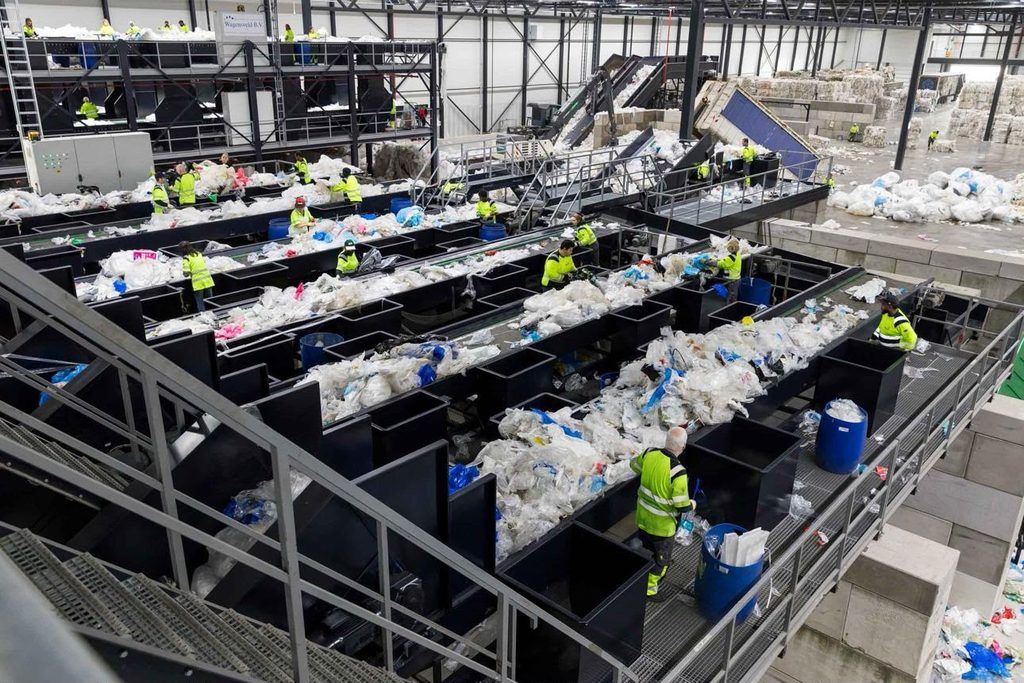
Collection, reuse and recycling need to be considered during the design process, taking into account the recovery infrastructure available in the markets where the packaging will be used.
Together, these considerations demonstrate why packaging optimisation requires a holistic approach rather than a single-minded focus on reducing material.
Real-World Packaging Innovations: What Does Optimisation Look Like?
To demonstrate how these principles translate into practice, Johann shared international packaging innovations, including examples recognised through the WorldStar Packaging Awards.
These developments show how relatively targeted changes in material, structure and format can deliver measurable improvements.
Simplifying Structures Without Losing Protection
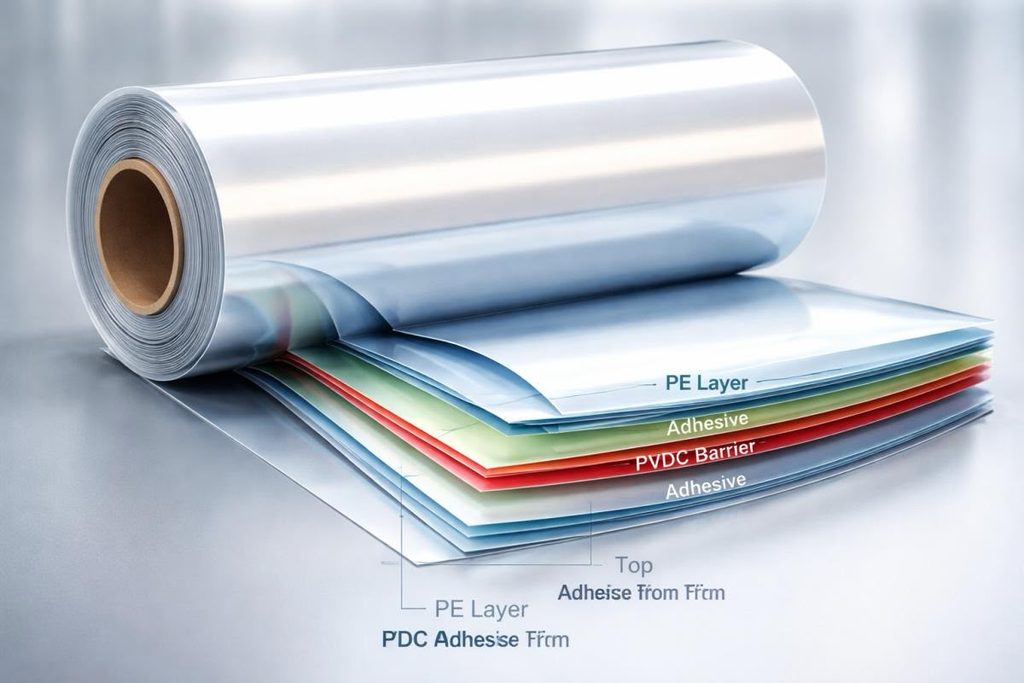
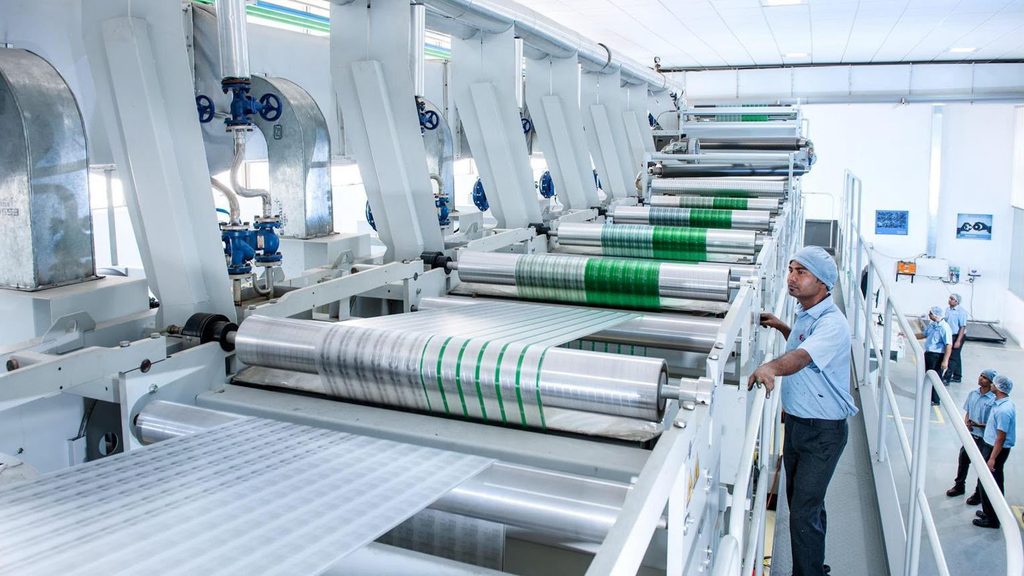
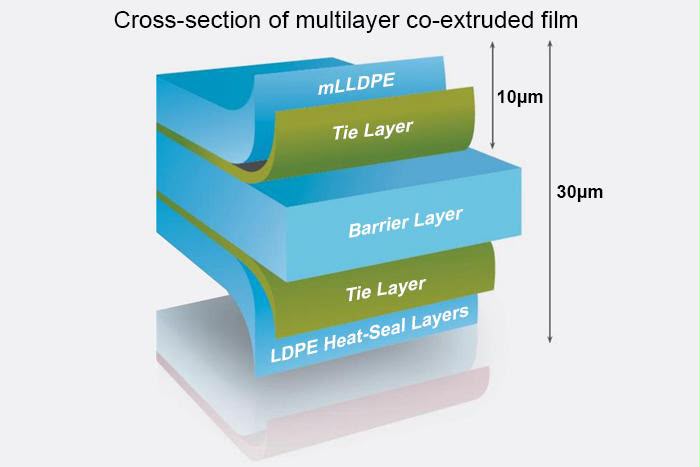
A polyethylene (PE) barrier packaging structure developed by Chemosvit Folie replaced a three-layer PET-based laminate with a two-layer PE structure.
The development removed one lamination step and reduced the use of adhesive, while being designed for the PE recycling stream.
It demonstrates how simplifying a packaging structure can support material efficiency and improved recyclability while maintaining the functional requirements of the pack.
Better Logistics Through Smarter Design
The RINGANA shipping box system, developed with DS Smith Packaging Austria, used three nested sizes to accommodate 30 products.
Height-adjustable elements reduced empty space, while the boxes could be reused at the destination warehouse.
Another example was the Ugo e-commerce box, developed with Smurfit Westrock, which reported 63% less empty space and 29% better pallet utilisation.
Both examples highlight how packaging design can influence transportation, warehouse efficiency and overall resource use.
Less Material, Better Product Experience
The DON Deli Cuts packaging innovation demonstrated how a resealable flow-wrap format could replace a rigid thermoformed pack.
The reported plastic consumption decreased from 10.2g to 4.9g per 100g pack compared with the previous format.
The use of a moisture-absorbing board also supported an increase in shelf life from 42 to 60 days.
This example illustrates how packaging optimisation can address several priorities simultaneously: material reduction, product preservation and consumer convenience.
Reducing Packaging Weight
The Grand Cheddar cheese packaging solution replaced a combination of paperboard overpack and flow-wrap with a single flexible packaging format.
The reported result was an 82% reduction in packaging weight while maintaining product protection and appearance.
Rethinking Refill Formats
The Nana refill pouch, a 2-litre mono-PE format, used up to 80% less plastic compared with two 1-litre PET bottles.
This demonstrates how changing the packaging format can create opportunities for material reduction while meeting the needs of the product and consumer.
These examples reinforce an important lesson: packaging innovation is not simply about introducing something new. It is about identifying a genuine need and developing a solution that delivers better overall performance.
Performance figures are based on the comparisons presented by Johann and the respective case studies. Results depend on the specified product, application and comparison baseline.
When a Great Idea Doesn’t Work: The Importance of Practicality
Not every packaging innovation automatically becomes a successful solution.
Johann also highlighted examples where promising concepts encountered challenges during practical application.
One example involved stretch film incorporating 25% recycled content. Although the material offered an opportunity to increase recycled content, production line speed became too slow.
Another example demonstrated how a simple additive helped farmers lay agricultural film faster.
These examples highlight an important distinction between developing a concept and delivering a solution that works in real-world conditions.
Packaging must be tested beyond its initial design specifications. It needs to perform under actual manufacturing, handling and usage conditions.
A sustainable material choice that creates operational inefficiencies may not deliver the intended overall benefit.
Can Artificial Intelligence Help Find the Sweet Spot?
As packaging development becomes more complex, Artificial Intelligence (AI) offers opportunities to support better design and optimisation decisions.
AI can help compare different material structures, analyse performance data, identify production inefficiencies and evaluate potential improvements.
Some possible applications include:
- Material optimisation: Comparing material thickness, dimensions and structures against product requirements.
- Product protection: Analysing barrier, sealing and shelf-life test results to identify potential improvements.
- Waste reduction: Identifying production defects and patterns that contribute to manufacturing scrap.
- Environmental assessment: Comparing material, transportation, emissions and recovery scenarios.
- Customer convenience: Analysing feedback about opening, dispensing, resealing and disposal.
- Cost optimisation: Assessing material, processing, downtime, freight and product-loss costs together.
Johann also presented Polydime’s Venti-Flow Growing System as an example of applying AI in product optimisation.
However, technology is only part of the solution. Customer requirements must define the objective, and testing must establish whether the proposed solution actually works.
Why Testing, Certification and Traceability Matter
As packaging requirements evolve, businesses must be able to demonstrate that their materials and solutions meet the necessary technical, safety and environmental standards.
Certification and traceability schemes can support different aspects of packaging development, including quality management, food safety, responsible sourcing, recycled content and recyclability.
Examples include:
- BRCGS Packaging
- FSSC 22000
- ISO 9001
- FSC Chain of Custody
- RecyClass
- ISCC PLUS
- Global Recycled Standard (GRS)
- DIN CERTCO and OK compost certifications
These certifications serve different purposes and are relevant to different materials, products and claims.
For manufacturers and exporters, understanding the requirements of destination markets is particularly important. Claims relating to recycled content, recyclability or compostability must be supported by appropriate evidence.
Responsible packaging is not about making sustainability claims. It is about ensuring those claims can be substantiated.
From Packaging Design to Responsible Plastic Use
At UPR – Using Plastic Responsibly, the conversation around sustainability must go beyond whether plastic is used or avoided.
Plastic plays an important role in protecting products, preserving quality, extending shelf life and supporting efficient distribution. However, these benefits must be balanced with responsible material selection, efficient design, waste reduction and appropriate end-of-life management.
The focus should be on using plastic where it serves a purpose, avoiding unnecessary material, improving packaging structures and supporting responsible disposal and recovery.
This is also why no single packaging material or format should automatically be considered the most sustainable choice for every application.
The right solution depends on the product, its functional requirements, the intended market and the infrastructure available to manage the packaging after use.
Packaging optimisation provides a practical framework for making these decisions.
The Polydime Approach: Innovation Starts with Understanding the Customer
Johann also shared insights into Polydime’s innovation model, which brings together product development, applied research and product testing to find the right balance for each packaging requirement.
The starting point is understanding what the customer actually needs.
What is the primary requirement? Is it better product protection, reduced material consumption, improved convenience, recyclability or a more efficient production process?
Once that need is understood, the remaining design considerations can be developed around it.
This approach recognises that different products have different priorities. A packaging solution that works exceptionally well for one application may not be appropriate for another.
The objective is to develop the right pack for the right product.
The Future of Packaging Depends on Better Decisions
Packaging will continue to evolve as technology advances, consumer expectations change and environmental requirements become more demanding.
For manufacturers, converters and exporters, the challenge is to remain innovative while ensuring that packaging delivers on its fundamental responsibilities.
Johann Tranchell’s presentation offered a valuable perspective on why optimisation must consider the complete packaging lifecycle rather than focusing on one individual feature.
And perhaps the Taylor Swift analogy captures it best.
A great performance succeeds because every element works together. Packaging should be no different.
It must attract attention, protect the product, perform reliably and deliver an experience that meets customer expectations.
Ultimately, sustainable packaging is not about choosing the most fashionable material or simply using less. It is about making informed decisions that balance product protection, material efficiency, production performance, customer needs, cost and responsible
end-of-life management.
Because the right packaging is not simply the one that looks good. It is the one that works best.
Use Plastic Sensibly. Dispose of It Responsibly.
UPR – Using Plastic Responsibly